Performance Prosody
How the voice makes performances special
Project Description

Cliff Miller, MFA
miller.cliff "at" gmail.com
Cliff Miller holds an MFA in Acting from the Meadows School of the Arts at Southern Methodist University. He is a professional actor based in New York City and has performed many of Shakespeare’s plays in major regional theatres. He has studied Fitzmaurice Voicework and has completed the prerequisites for the teacher certification course in Knight-Thompson Speechwork.
How is the performance of Shakespeare's texts made special? Does each performance have an independent relationship to the text, or are performances related to each other? This article presents findings from a corpus analysis of recordings spanning eighty-five years from 1930 to 2015. Several factors changed scholarly views on Shakespeare (both text and performance) in the Twentieth-Century, ultimately tipping the balance away from the metre of the text, towards the meaning of the text in terms of performance. The results of a corpus study of 61 recordings contribute to our knowledge of how Shakespeare's plays are differentiated from ordinary speech not only by the text, but through performance, as well as how Shakespearean performance is evolving over time. Three aspects of speech prosody, specifically tempo, rhythm and pauses, are analyzed computationally. Evidence suggests that tempo has decreased while rhythmic contrast and amount of pause has increased. The role of metre as well as enjambment and caesura are addressed. The results are consistent with the conclusion that the metre of Shakespeare’s verse may not have had a large influence on the spoken rhythm of professional performance for nearly a century.

Aaron Carter-Ényì, PhD
carterenyi "at" gmail.com
Aaron Carter-Ényì is an Assistant Professor of Music at Morehouse College in Atlanta, GA. He holds a PhD from Ohio State University (2016), was a Fulbright Scholar to Nigeria in 2013 and is a 2017 fellow of the American Council of Learned Societies (ACLS). Recent scholarship appears or is forthcoming in Africa (Journal of the International African Institute), Ethnomusicology, Music Theory Online, Oxford Handbook of Singing and Tonal Aspects of Languages.
Gallery
Gallery of results plots
-
 Add Your Own Title HereThis element represents the description field.
 -
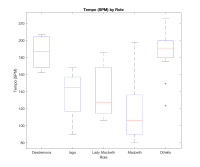 Tempo (SPM) by RoleThis element represents the description field.
 -
 Add Your Own Title HereThis element represents the description field.
 -
 Add Your Own Title HereThis element represents the description field.
 -
 Add Your Own Title HereThis element represents the description field.
 -
 Add Your Own Title HereThis element represents the description field.
 -
 Title 7Description
 -
 Title 8Description
 -
 Title 9Description
 -
 Title 10Description
 -
 Title 11Description
 -
 Title 12Description
 -
 Title 13Description
 -
 Title 14Description
 -
 Title 15Description
 -
 Title 16Description